-1790351539694.png)
There was a time when nearly every playground had a seesaw.
Growing up with two brothers, we rarely used one exactly as intended. We were always experimenting—shifting our weight, changing positions, and seeing just how far we could push such a simple lever.
Looking back, a seesaw isn't a bad metaphor for some of life's biggest decisions.
Because most important decisions aren't really about choosing between something good and something bad.
They're about choosing between two things that matter.
A vacation home could give your family a place to return to year after year and create traditions together. But it may mean traveling to fewer new places.
Launching another business could create opportunity, wealth, and something meaningful to build. But it may also mean giving up time with your family—again.
Paying for your children's education could give them an extraordinary financial head start. But you may also wonder whether paying for everything deprives them of the responsibility that helped shape you.
These aren't simply financial calculations.
They're tradeoffs.
The numbers can clarify the decision. They can't make it for you.
In our practice, we often frame important decisions in terms of tradeoffs.
What does this choice make possible?
What might it require you to give up?
What changes if you choose the other path?
Financial planning can help make those tradeoffs more concrete. We can model scenarios, evaluate tax implications, examine cash flow, and understand how a decision affects the rest of your financial life.
But eventually, the spreadsheet reaches its limit.
Because the most important question usually isn't:
"Which option leaves me with more money?"
It's:
"Which tradeoff is more consistent with the life we're trying to create?"
That's a very different question.
Your values give the numbers context.
The clearer you are about what matters to you and your family, the more useful financial planning becomes.
Maybe flexibility matters more than maximizing wealth.
Maybe creating experiences with your children matters more than owning another asset.
Maybe leaving a financial legacy is deeply important to you. Or perhaps you'd rather give more to your children while you're alive and experience the impact alongside them.
There isn't a spreadsheet that can determine which of those values is correct.
But there is tremendous value in understanding what each decision means financially so you can make the choice intentionally.
That's where financial decisions become life decisions.
And those decisions can ripple far beyond an account balance. They can affect how you spend your time, the experiences your family shares, the opportunities you create, and sometimes even the generations that follow you.
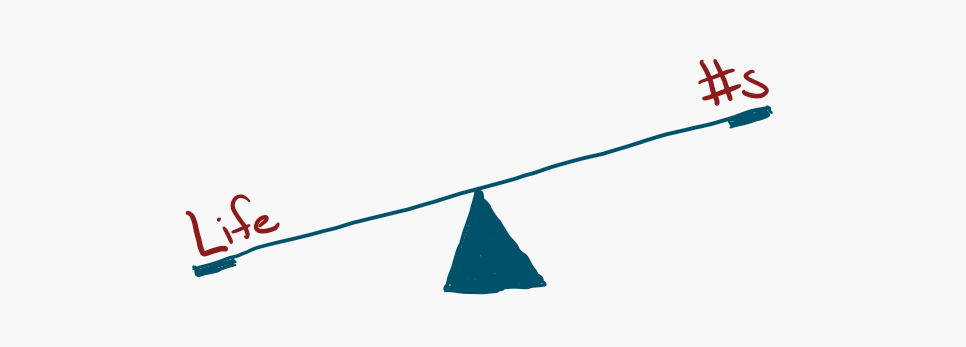
Bring back the seesaw.
Maybe the old playground seesaw deserves another look.
On one side sits what you gain.
On the other sits what you give up.
Good planning doesn't necessarily make the seesaw perfectly balanced—and it doesn't eliminate the tradeoff.
It helps you see what's sitting on each side.
And once you can see that clearly, you can ask the question that matters most: